-->
Showing posts with label Emergency Preparedness. Show all posts

Wednesday, January 11, 2012

Food Storage Goals 2012

It's that time again. Time to go through last years goals and kick ourselves for not doing them evaluate how we did, and make some new goals for the next year.

Last year my food storage/emergency preparedness goals were:  

1. Go through and "revitalize" the following:
  • Car kit  Car Kit Revamped! Check out the post here.
  • 72 hour kits  Not even close...although I did "go through" them and used all the cash for my kid's school lunches when money was tight this fall. I guess we can count that as rotating?
  • 3 month supply menu plan  Yep, this didn't happen either.


2. Eat up current food storage
  • Make bread often (eat only homemade bread) Well, I wouldn't say we ate only homemade bread, but we eat mostly homemade bread. It just tastes better.  I even have a new favorite bread recipe that I'm sharing this week for our Food Storage Friday recipe. It's delicious.
  • Keep ground wheat flour in freezer for any cooking/baking Check! It's definitely easier to make the choice to have whole wheat pancakes, or healthy up a recipe when I have whole wheat flour already ground and ready to use.
  • Eat the pantry and freezers clean I did a great job of this! I think we only moved one box of "pantry food" (maybe it was two) but it was mostly spices and things like that. Moving is good for cleaning out cupboards. Not great for much else.
  • Make a 3 Month Supply Menu plan and grocery list (catered to our family) so that when we move into our new home I'll know exactly what to buy  This didn't happen, I have definitely not been on top of this.
  • Buy as much of our food storage as budget allows when we move into our new home Due to some financial strains this fall, the budget didn't allow ANY food storage to be purchased.  But luckily, things are looking up and we should be back on the bandwagon soon.
Considering all that happened in 2011, I'm pretty pleased with my little attempts at my food storage goals. 2011 was a tough year for me, but 2012 is already looking great.  I'm very excited to get going and get my family prepared.

Here are my  
2012 Food Storage/Emergency Preparedness Goals

1. Write out a 3-Month supply Menu plan and grocery list and BUY IT!  No more excuses, just get 'er done.

2. Redo the 72 hour kits, adding the baby items, and replacing the money.
  • Rotate the food in the 72 hour kits/batteries etc, every six months (or 2 times this year)
3.  Buy more candles/matches/flashlights/batteries and stock them where I can find them easily.
4. Make a family emergency plan and practice it with my family.

5. Can triple or quadruple the amount of salsa I made in 2011. Because I only have 3 jars left and it's only January.

What are your food storage and emergency preparedness goals for 2012?

Thursday, November 17, 2011

Preparing for Sick Days


One of my earliest memories of Hannah is when Mountain Man and I both had food poisoning (ground turkey not cooked all the way?).  We had one little baby and we were so sick. I called Hannah and she brought us over some gatorade and crackers. Ever since then I have been a firm believer in having sick foods on hand!

We've talked a little bit about being prepared for "sick days" and including "sick foods" in your three-month supply.  I decided this year that I was going to allot some money, and make a list for stocking up my "sick foods" in preparation for winter and the inevitable sicknesses that will come. 

On my list:
-saltines
-orange juice concentrate (my favorite juice when I'm sick with a sore throat)
-a few varieties of soup (so I won't have to cook--also easy on the stomach of who is sick)
-7-up (or Sprite) for an upset stomach
-Gatorade!  Do you know they make clear gatorade now? Genius! It's still flavored (this one is watermelon-strawberry), but if your kid throws it up, it won't stain!

Something I still need to get is hand sanitizer. I like to keep a large container that I get from Sam's Club around in the winter time for refills of the little bottles I keep in the house and the car.  I also really love the chlorox/lysol wipes for wiping down door knobs and faucets and other things so germs don't spread.

After I get my sanitizer, the total for my "sick food prep" will be just under $20.  So for twenty bucks I've given myself a little peace of mind.   I kind of hide these foods so we won't use them just because they're there, and I'll be sure to restock them as needed.

Don't forget to get extra fever and pain relievers too! You don't want to have to run to the store at 3am if you or your kid develops a fever.

What are some other must-haves for sick days? 
 Mountain Man's mom always fed him warm jell-o water.  

Are you planning on stocking up on sick food for the winter?

Wednesday, May 25, 2011

How Can You Help?

Today I want to talk about how you can help people who are suffering right now.


In light of recent events (tornadoes in the Midwest, and in the South last month), you may be wondering what you can do to help.  There are many charities to choose from when it comes to donating money, but let me make a suggestion: The LDS (Mormon) Church.  It probably seems obvious that I would suggest this, because as you know we are Mormons, and many of you are, too. Most of our Monday motivational thoughts come from Mormon people, too.  However, I'm not just suggesting that you donate to the Church because we are members of it.


The LDS Church has always been my charity of choice because 100% of my donation goes to people in need.  The Church has a huge network of volunteers throughout the world (members like me, and many of you), which makes this possible.  Of course, some people do get paid for their work, but salaries are covered through other various investments that the Church has.  All donations made to the Humanitarian Fund go to those in need.  You can read more about that here, and you can also make your own donation on that website.


Another article that I want to recommend is one that recently appeared in the Washington Post "On Faith" blog, entitled "Where is God (and the Mormon church) in a natural disaster?"  It describes a little bit about the Mormon welfare system and disaster response, and it's written by the head of Public Affairs for the Mormon church.  It's a very interesting read and it's so inspiring to read about all the good things they are doing to help (thanks to generous donations by people worldwide).


It is so scary to see what has happened to our fellow Americans in the Midwest.  It's heartbreaking.


We have been told for years to "be prepared".  I hope that if you are safe in your home tonight, you are thinking about how you can become better prepared.  Where are you lacking?  Do you need water? More food?  Flashlights, candles, medicines, first aid kits?  All of the above?  It's overwhelming to think about, even for me.  Even though I have a food storage blog and share ideas with you each week, I'm certainly lacking in certain areas.  It's hard!  But I think that recent events have lit a fire in me and renewed my motivation a bit.  I hope it's done the same for you, too.  I'm not going to lie - it's difficult to do it all.  It's also expensive, which is probably what's keeping most people back.  And that's why we started this blog in the first place - to motivate people, to get them on track, to help them out step by step, a little at a time.  It's certainly benefited us, and we know it has helped many of you, too.


Finally - we want to hear your stories.  Have you ever been involved in a natural disaster?  Maybe not necessarily this last week, but have you ever?  If so, we'd love to hear your story.  How did you get by?  Did you have enough?  What were you lacking?  What do you wish you had known beforehand?  What did you learn?  A few years ago my sister-in-law shared her "What I wish I'd known" story from when she was in an ice storm (a "must read", by the way!).  We would love to hear your stories and, with your permission, share them right here on our blog.  Abbie and I feel like we say so much here, but I think we can all learn from each other and what better way than to hear each others' stories?  So, if you have a story, please share it!  Email us at safelygatheredin (at) gmail.com.


And again, if you'd like to donate money to Humanitarian Aid, visit the LDS Church's donation page here.  Remember, 100% of your donation goes to victims, so you can feel good about where your money is going.

Thursday, May 5, 2011

Open it up, try it out

A couple of years ago, a storm blew over our home in Georgia, ripping down trees and power lines.  Large branches fell from the trees in our yard, and some landed on our electrical wires, completely ripping them from where they were connected to our home.

In short, the power went out, and it was nighttime.  Perfect, I thought, this will be a great opportunity to try out some of our emergency preparedness stuff! 

We had recently gotten one of those nifty crank flashlight/radio/cell phone charger thingies, and I was excited to try it out for the first time.  When we had received it, I carefully placed it (still in the box) into our 72-hour kits, keeping it brand-spanking-new so that it would be in mint condition in an emergency.

Umm... bad move!  Once I finally found it (after digging around in the pitch black for a while), it took a really long time to get it open because it was in one of those packages that takes knives and scissors and jackhammers to get open (you know what I'm talking about, right?).  So, I finally got it open (a few curse words later), and I expected that I would just have to crank it and it would just work right away, right?

Wrong.  It kinda had to be put together.  And there were lengthy directions about how to use it, what not to do, etc.  And guess what.... I couldn't read those directions because it was too dark and I had completely run out of patiences.  I gave up.

Moral of this lengthy story?  When you get new things for your 72-hour kits, or for anything relating to food storage/emergency preparedness, open it up and try it out before the emergency occurs!  Emergencies are stressful; don't add the stress of having to learn a new concept/skill on top of that.

So, what kinds of things should you try out in advance?  Everything!

-Open up flashlights, make sure they work.  Put them in easy-to-grab places, so you won't have to dig around for them in the dark.

-Try out any cooking methods you have (camp stoves, etc)

-Try out your water purifying method of choice, or at least read up about it so you know what to do when/if the time comes

-Take the plastic wrap off your first aid kit.  Familiarize yourself with the items inside.  Figure out if anything more is needed.

-This idea also extends to food storage.  Do you store a lot of wheat, but never cook with wheat?  Start practicing now!  You don't necessarily have to cook with wheat all the time now, but you should know how to do it if you are storing it.

Basically, just open things up, read over any directions, and make sure things work!  Also, take off any extraneous packaging that takes up extra space that you might need (like in your 72-hour kits, which are often tight on space).

Any of these things could be fun family activities to do together.  Designate an emergency preparedness night, and practice using all your gear.  Eat some food storage food to round out the activity.

Is there anything major that you should do that I've missed?  How do you prepare your preparedness items?

Thursday, January 20, 2011

Innovative Camping Products (article review)

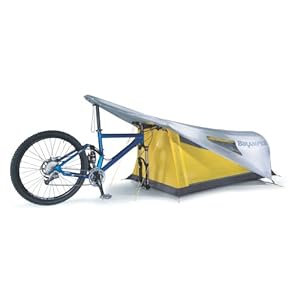
Topeak Bikamper One-Person Bicycling Tent
I don't know about you, but whenever I see a web page or news article about camping products, I get a little bit excited to read it.  Not because of my love of camping (I actually don't really love it), but I am always interested in new and interesting ideas when it comes to camping.... you know, for emergency preparedness purposes.  And I'm always looking for things that will make my camping experience a bit easier and a bit more like home.


I came across this article a few weeks ago on the Camping Tourist website and wanted to share it with you today.  Some things seems a bit over the top, but others are pretty good ideas and there is at least one thing I'm thinking I want for my 72-hour kits.  Plus it's just fun to see what people are coming up with these days!


Click on over to the full article to see pictures and read more about them, but I just want to touch on them below.  The links below take you to Amazon so you can read specific reviews and get price information.


1. The bikamper (shown above): Basically, a tent that uses your bike frame to hold it up.  Looks interesting, especially if you love biking and camping.  Hence the name, bikamper (bike + camper).


2. The selk'bag.  The only way I can really describe this is to say that it's a sleeping bag "outfit" - a sleeping bag with arms and legs.  According to the article, it also doubles as a mattress.  They even come in kids' sizes and a variety of colors!


3. The cocoon.  I couldn't find this on Amazon but picture a tear-drop shaped tent hanging from a tree branch.  And you sleep in it sitting up!  Worth a look, just because it's pretty interesting looking....


4.  Solar powered tent.  I couldn't find anything like it on Amazon, but this is interesting.  This tent has LED lights inside, plus it can charge batteries.  It's too bad Amazon doesn't apparently sell these, because I'm curious about how well it would work and what people would think of this.  It's a great concept!


5. Stronghold camping tent.  Basically, an igloo-looking tent.... you know, for all those times you may find yourself stranded in Antarctica (literally, that's what it's for - places like the Himalayas and Antarctica).  At $3k, these are a bit out of my budget (plus I don't see myself going on a frigid expedition any time soon...)


6. Symbium3 Quechua backpack.  I can't find this on Amazon either so I don't know the price, but it's an aluminum-support backpack that apparently doesn't put any stress on your back.  Looks like it would be an awesome carrier for your 72-hour kits; however, it's pretty cool looking so I would guess it's pretty pricey.


7. Respite - a tent/hammock mix.  Could be comfy.


8. Pocket shower.  Wouldn't it be great to be able to shower even if you were stuck in the middle of nowhere??  There are lots of options on Amazon for something like this.  Does anyone have one that they recommend?


9.  Coleman Rendezvous stove.  Basically a sophisticated camping stove, but to be honest I'm not very well-versed in camping stoves, so you'd have to decide for yourself if it's fancy.  And that brings me to a question... can "sophisticated" and "camping" really be in the same sentence??


10.  DirecTV's Satgo.  Because camping shouldn't stop you from missing that episode of American Idol... haha.


Do any of you have any experience with any of these items?  Do you own (or know of) any other innovative camping ideas that could be used for emergency prep?


(image from Amazon.com)

Thursday, February 18, 2010

Snow Day in the South, part two

Yesterday, Abbie shared a post about her experience with the snow that rolled in last weekend.  My experience was pretty similar.


Abbie mentioned that she avoided the grocery store last Friday, but I had to pick up some ice cream for a get-together we had that night.  On the way, I stopped at the library to drop off some books and pick up a few new ones.  I was leisurely browsing through the books (my husband had come home early that day, so it was quite nice to be child-less for this trip!) when suddenly the librarian yelled, "We will be closing in 5 minutes!!  Bring your books to the front and check out!!"


Excuse me??  This was my mini-vacation, a trip to the library all by myself!  And now it was being cut short... and it wasn't even snowing yet!  ::sigh::  Okay.  I barely even made it to the desk when they were already turning off the lights.  The librarians were practically making a beeline for the door - they couldn't get out of there fast enough.


"Is this because of the.... snow??" I asked hesitantly, because I didn't want to sound lame.  Like I mentioned, it wasn't even snowing yet.  But, the librarian answered in the affirmative.


So I made my way out to the car and drove about half a mile up the road to the grocery store for the ice cream.  Snow flurries began as I was driving, and although I grew up in New England and consider myself a good snow driver, I was pretty nervous because the drivers here are not used to snow and I could tell that other people were nervous by the way they were driving.  The traffic was also horrible because it was Friday afternoon, AND people had left work especially early in anticipation of the snow.


The grocery store was just as I expected it to be.... FULL of people who were stocking up on water bottles, canned goods, and flashlights.  I was shocked for two reasons: one, I didn't understand the hype because let's face it, this is the SOUTH... any snow we get is NOT going to last more than 24 hours.  And two: are these people really without these items on a normal basis?  Do people really not have flashlights and canned goods?  After doing a food storage blog for almost two years, it's almost like second nature to me to have at least SOME canned goods in my home at all times.  But I guess that's not the case for everyone.


I will admit: sometimes, when I hear about a storm coming my way and I assess my food storage, part of me still feels like going to the grocery store and stocking up on emergency supplies, even though I already have them in my home!  Is this normal, does anyone do this?!?  A part of me wants the excitement of running to the store and filling my cart with new flashlights, more canned goods, more bottled water.... even though I have plenty of all of these things in my home already.  Is that weird??


Anyway, I resisted all urges to get a cart and join the chaos, and I grabbed my ice cream, paid, and left (thank goodness for self-checkout!).


By the time I got home, the snow was coming down at a steady pace.  It was very exciting and fun.  My three-year-old has never experienced anything like this so it was great to see her reaction.  She and my husband built a snowman, had snowball fights, and just had an all-around great time.


One funny thing that happened: when I got home from the store, I was telling my husband about the chaos I encountered at the store.  He laughed too, but then a couple minutes later he said, "So... we DO have food, right? Like, some canned goods?"  !?!?  Umm... honey, have you looked in our food storage closet lately? Did you know that I write a food storage blog??  Hellooo!  (not to sound mean.. it was really funny though.  I assured him that yes, we do have "some food" and that we would be fine.  He grew up in Wisconsin, he knows what a "real" snowstorm is like... I was pretty surprised that he was even asking me that.


The lights flickered a few times on Friday evening, and our Olympic viewing was pretty hindered by the poor cable feed (because of the snow), but other than that the snow didn't affect us much on Friday.


On Saturday, however, long after the last snowflake had fallen, our power went out.  I called the power company (I have their # saved in my cell phone!) and reported the outage, and they told me that the power should be back on around 6pm (which was 8 hours from then!).  I was pretty bummed out because I had just put some dinner in the crockpot.  I put it in the fridge and hoped that the electricity would come back sooner than they said.


Unsurprisingly, I became quite bored soon after the lights went out.  I mean, it's not as if I rely on electricity for everything I do, but it seems like the only things I could think of to do needed electricity.  I felt like playing the piano, but it's electric.  I thought about watching movies, but... yeah.  We read some books, played some games.  It got kind of cold in the house but we just bundled up and it wasn't too bad.


Thankfully, the power came back on just a few hours later - long before 6pm.  


As I reflected on this experience, I am surprised at how disappointed I was with the power outage.  I know that I rely on electricity a lot, like most people do, but I really don't deal with outages very well.  It makes me feel like I don't have any control over my surroundings... I am constantly flipping on a light switch and then remembering, "oh yeah, the power's out!" and I don't like that.


Thankfully it was daytime, and no flashlights were needed at all.  I am very thankful that we were prepared in that aspect, however... although I should re-check all the batteries because my three-year-old loves to play with flashlights. :)  Thanks also to everyone who left great comments and suggestions in yesterday's post about flashlight options!


All in all, this was a great experience and I'm happy we could have a "mini" emergency to help us get prepared and think about what we need to do if something truly awful came our way.

Wednesday, February 17, 2010

Snow Day in the South

The snowstorm that went through Texas last week was predicted to hit Georgia on Friday afternoon. I have to admit that I was a bit skeptical. In the (almost) six years we've lived here, we've seen snow two times, and only for a few minutes in small flurries. Having grown up in Utah, I'm not easily impressed when it comes to snowfall.

I talked to Aleasha Friday morning as she was heading out to the store. The last thing I wanted to do was join the crowds in the grocery stores buying up supplies.

Even though I was skeptical of the storm, I did a quick inventory in my mind. I had done my weekly grocery shopping on Wednesday and we had plenty of perishables (milk, eggs, etc) and I wasn't worried about the non-perishables. Although my 3-month supply isn't complete, it is more than enough to last us through a weekend of snow.

It started to snow early afternoon. My girls ran out to catch snowflakes on their tongues, but I still didn't believe it would stick.


At this point I decided, we might get a decent storm. Still, I wasn't worried about being snowed in. I knew we had plenty of bottled water and food.


At this point, Mountain Man made a comment about the possibility of losing power. I scoffed at this, but he said that trees in the south were not made to withstand snow. He pointed out that the boughs of our trees were already bending with the weight of the snow. If a tree fell onto a power line, it could knock out the power.

Then I started to do a power outage inventory. I still wasn't nervous (Utah girl here, remember?) but knew I needed to be prepared. I plugged in both our cell phones and the lap top (for movies of course!) so they would have a full charge. I double checked that the matches were near the candles, and set some candles out for the dinner table for fun. Power outages can be fun for kids if you play them right. I did a mental check for blankets, we have lots, and we could all sleep in one room for warmth if need be. I knew we had plenty of fuel and Mountain Man's backpacking stove in the garage if we needed to heat up meals.

After I'd run over these things in my head, I knew we'd be okay for an extended period of time. So I just settled down and enjoyed the novelty of snow in the South.


It turned out that, although the power flickered, we never actually lost it. And the roads were clear by the next morning, in fact most of the snow melted the next day. But I was able to enjoy the storm by knowing I had covered all my bases.

The neat thing is that because I was already physically prepared (by having blankets, fuel, food, and water). When the actual storm hit, all my preparation was mental. Then when my check was complete, I could help make the situation be fun for my kids. Even though we had power, we ate dinner by candle light and roasted marshmallows over the open flame.

Honestly, I wished the snow had lasted. How fun would it have been to be snowed in for a weekend! But I can say that knowing that we were prepared to enjoy it comfortably.

Besides the basics, what is something you personally want to have in the event of being snowed in? I admit, I checked how much cocoa powder and chocolate syrup we had.

Thursday, January 21, 2010

Help Haiti


I hope you enjoyed our post on earthquake preparedness yesterday. This earthquake in Haiti is one of the situations we prepare for by having our 72 hour kits stocked and ready to go, and our pantries full of nonperishable foods. Unfortunately, most of the population of Haiti doesn't have food stuffed under their beds and in their guest closets.

One of the reasons for having food storage that we don't talk a lot about is the opportunity for giving. If we set aside enough food and supplies for our families in times of trouble, then we will always have enough to share with others in hard times.


Sarah, in the post yesterday, gave a great suggestion for helping Haiti. Use a few meals from your 3 month supply in the next few weeks and save the money you would have spent on groceries and send it to Haiti via your favorite charity.


If you want to help but don't have the means to send money, consider serving in your own community. Take a box of canned goods to the food bank and volunteer your time. Take your children to talk to people in a nursing home for an evening. Bake dinner for a family in need in your neighborhood.


For the next two weeks, Hannah and I will be donating all of the profits from our e-book sales to help the victims of Haiti. The money will be going to Humanitarian Services of The Church of Jesus Christ of Latter-day Saints. We picked this service because 100% of the money goes directly to the victims. LDS Humanitarian Aid is run completely by volunteers so money isn't taken out of donations to pay administrative salaries.


If you've been waiting to buy the e-book, now is a great time--get your food storage recipes and help the earthquake victims at the same time!

Wednesday, January 20, 2010

Earthquake Preparedness

The recent tragedy in Haiti has shocked me into the world of earthquakes. Living on a major fault line most my life has caused me to repress thoughts of earthquakes. Growing up I experienced many earthquake drills in school and home and yet have never been in a major earthquake. Because of the inescapable fact that someday I will be in an earthquake, I am quick to empathize with those whose world is literally rocked by this natural disaster.


Earthquakes differ from other natural disasters as there is next to no real warning. Unlike hurricanes or tornadoes, we can not watch them develop. We must have our homes and our families constantly prepared. If you live near a fault line or plan on ever visiting somewhere by a fault line, read through these recommendations by FEMA:

Before:

Repair defective electrical wiring, leaky gas lines, and inflexible utility connections. Get appropriate professional help. Do not work with gas or electrical lines yourself.

Bolt down and secure to the wall studs your water heater, refrigerator, furnace, and gas appliances. If recommended by your gas company, have an automatic gas shut-off valve installed that is triggered by strong vibrations. (My bookshelf, which is right near the head of my bed, is getting bolted to the wall today!)

Place large or heavy objects on lower shelves. Fasten shelves, mirrors, and large picture frames to walls. Brace high and top-heavy objects.Store bottled foods, glass, china, and other breakables on low shelves or in cabinets that fasten shut.

Anchor overhead lighting fixtures.

Be sure the residence is firmly anchored to its foundation.
Install flexible pipe fittings to avoid gas or water leaks. Flexible fittings are more resistant to breakage.

Locate safe spots in each room under a sturdy table or against an inside wall. Reinforce this information by moving to these places during each drill.


Hold earthquake drills with your family members: Drop, cover, and hold on! (Growing up we had earthquake drills about once a year. My Mom would remind us where our 72 hour kits were, and to some that they even existed. We had a designated meeting place, out by our mail box. We would separated, the drill would start, we would grab our kits and meet by the mailbox.)

During:

Indoors: Take cover under a sturdy desk, table, or bench or against an inside wall, and hold on. If there isn’t a table or desk near you, cover your face and head with your arms and crouch in an inside corner of the building.

Stay away from glass, windows, outside doors and walls, and anything that could fall, such as lighting fixtures or furniture.

Stay in bed - if you are there when the earthquake strikes - hold on and protect your head with a pillow, unless you are under a heavy light fixture that could fall. In that case, move to the nearest safe place.

Use a doorway for shelter only if it is in close proximity to you and if you know it is a strongly supported, load bearing doorway.

Stay inside until shaking stops and it is safe to go outside. Most injuries during earthquakes occur when people are hit by falling objects when entering into or exiting from buildings.

Be aware that the electricity may go out or the sprinkler systems or fire alarms may turn on.

DO NOT use the elevators.

Outdoors:

Stay there.

Move away from buildings, streetlights, and utility wires.

In a moving vehicle:
Stop as quickly as safety permits and stay in the vehicle. Avoid stopping near or under buildings, trees, overpasses, and utility wires.

Proceed cautiously once the earthquake has stopped, watching for road and bridge damage.

Trapped under debris:
Do not light a match.· Do not move about or kick up dust.

Cover your mouth with a handkerchief or clothing.

Tap on a pipe or wall so rescuers can locate you. Use a whistle if one is available. Shout only as a last resort - shouting can cause you to inhale dangerous amounts of dust.

After:

Be prepared for aftershocks. These secondary shockwaves are usually less violent than the main quake but can be strong enough to do additional damage to weakened structures.

Open cabinets cautiously. Beware of objects that can fall off shelves.

Stay away from damaged areas unless your assistance has been specifically requested by police, fire, or relief organizations.

Be aware of possible tsunamis if you live in coastal areas. These are also known as seismic sea waves (mistakenly called “tidal waves”). When local authorities issue a tsunami warning, assume that a series of dangerous waves is on the way. Stay away from the beach.

Source


If you want to donate money or supplies to Haiti here are a few different websites to visit:

Red Cross
Islamic Relief
LDS Services

My mother told me today about a family who had decided not to go out to eat for two weeks and instead give the money they would have spent to the relief effort in Haiti. Maybe for some of us, sacrificing restaurants for two weeks would not create a lot of excess money. But what if we prepared a few meals, or maybe even a week of dinners, from our food storage and donated the money we would have spent on groceries. Any little bit can help in this situation.

Thursday, January 14, 2010

Keeping cash at home

Something I've been thinking about a lot lately is keeping cash at home.  This is a really important aspect of preparedness because there are several situation where cash might be the only option for purchasing things.

For example, when a natural disaster hits, it's almost inevitable that electricity will be down, perhaps for several days.  Credit cards and debit cards will be of little use, and it won't really matter how much money you have in the bank because you won't be able to access it.

There are other reasons to have cash at home.  In December, one of my mother-in-law's employees had her purse stolen.  Within hours, the thief had spent hundreds of dollars at a department store.  This employee had to then put a "freeze" on all her accounts - her savings account, credit cards, debit, and checking - to ensure that no more money would be stolen.  The freeze lasted 10 days, during which time she had to wait for all new credit/debit cards to be sent to her, as well as new checks with new banking numbers.  The worst part is, this was all before Christmas, when she needed to be buying gifts for her children.  She also needed to pay her bills, but unfortunately she had no way of doing either.

So how much cash should you keep?  It depends on the size of your family, and what kind of natural disasters could occur in your area.  I grew up in New England, where deadly ice storms could shut down towns for weeks.  I don't think it's too crazy to say that you should keep several hundred dollars in your house - maybe more.

In the past, people may have balked at the idea of taking money out of a bank and keeping it in their homes - think about the interest they would lose!  However, I think it's safe to say that your money isn't making much money these days, so you might as well have a chunk of it at home.

Another thing to consider is where to keep it - obviously a fireproof, waterproof safe would be ideal.

How much cash per person do you keep at home (if you don't mind sharing!)?  Does anyone have any stories about when they wished they had a cash reserve at home?  Stories about using yours?

Tuesday, December 29, 2009

Preparedness saves lives

I know we're technically taking a break until next Monday, but I just couldn't pass up the opportunity to share this article with you.  A Nevada couple was stranded in their car for three days because of snow; thankfully, they were fine because their car was stocked with food, water, and warm clothes.


It's obvious that being prepared can save your life, but sometimes that's hard to remember when we are in the process of stocking up.  It's easy to get discouraged and/or bored with it all.


Click here to read the article - it's a great reminder as to why preparedness is essential.  Hurray for car kits! (fyi - we'll be starting to put together our car kits in just a few weeks - as soon as the 72-hour kits are done.  We gather a few items a week, so follow along!)

Wednesday, December 2, 2009

Re-post: What I Wish I'd Known During the 2008 Ice Storm

We're re-posting this article, which was published here last winter.  It's a great reminder for all of us, especially as cold weather sets in and there are more chances for weather-related hardships in the colder climates.  Special thanks to my sister-in-law for writing this post for us!  This is a valuable read for everyone!

What I Wish I’d Known During the 2008 Ice Storm
By Shauna Siebach

I always thought of myself as a level-headed person who deals well under stress. I thought if I knew a disaster was coming, I’d make the necessary arrangements to ensure my family and I would be comfortable and safe. However, I did not deal as well as I thought I could during the ice storm that slammed New Hampshire in December [2008].

I feel most of the problem was that I was not prepared for it to be worse than I thought it would be. The weather report prior to the ice storm notified us there would be a snow storm that would mix with ice and freezing rain. Upon hearing this I planned to do my grocery shopping the day before and then hunker down at the house keeping the wood stove going during all day.

The night before the storm I went to bed as usual expecting to do my cleaning the next day while I was stuck inside for the day. We lost power around 10 p.m. but this had happened before and I thought it would come back on shortly as it had done in the past. My husband Mike woke me up around 2 a.m. to say he thought we weren’t safe in the house and needed to go to my parent's home or to a hotel. When I looked outside I saw that most of the trees surrounding our house were either doubled over or broken from the weight of the ice. There was also a fire truck in front of our property clearing away a fallen tree. Looking at the conditions I told him I thought we’d be safer inside rather than traveling anywhere on icy roads. For the rest of the night we were kept awake by crashing branches and trees.

The next morning Mike drove into town and told me that everything was without power and said he was nervous leaving us at the house without a phone or way of contacting him. After he left I got things ready to head to my parents house because I knew they had a generator and a land line phone so I would at least be in contact again. I thought we would be there for the day and would head back home when we got our power back that evening. I packed enough clothes and supplies for me and my one-year-old for the day.

Once I got on the road, however, I realized things were much worse than I originally thought. There was no power in any of the towns I drove through on the way to my parents'. It is normally a 25 minute drive and it took me an hour and a half to get to their house due to closed roads. When I arrived at their house (after walking the last half mile because their road was impassable by car) I was exhausted and the day had just begun. The news I heard was that I would most likely be without power for another 5-7 days and it was then that I knew I was very unprepared for this to happen.

While there are a few stories of compassion and brotherly love coming out of this, unfortunately there were many times when people took advantage of others. Generators especially demanded a premium. We saw generators and generator accessories being sold for 2 to 5 times their normal price. One man purchased the entire stock of an emergency essential item and auctioned them off outside the store exit. Fist fights broke out over who grabbed what first. The shelves where batteries and flashlights are stocked were bare early the next morning.

One other aspect of the power outage that my husband took care of was keeping the house functioning. We are on a well so we lost water pressure. Because we couldn’t keep our faucets dripping to prevent pipes from freezing, we had to keep the house temperature above freezing. Luckily we have a wood stove and we had a kerosene heater that we could keep running overnight. Our sump pump stopped working, obviously, so to keep our basement from flooding, Mike would fill 5 gallon buckets and use the extra water to back fill our toilet to keep that working. He also thought it was important to move our cars around the driveway to make it look like someone was always home at night, because there were some robberies in the area.

Knowing what I know now, here are some things I wish I’d done differently:

  • Take a shower the night before the storm. I wasn’t able to take a shower for a couple days after the storm because my parents’ generator was having trouble.


  • Not buy so many perishables when I went grocery shopping the night before. I thought I was doing a good thing going grocery shopping the night before, but we lost a bunch of stuff in our fridge and freezer because we were without power for so long. We moved the food to our porch to keep it cool, but we had a 50 degree day that spoiled the food.


  • Done my cleaning the night before. All my laundry was clean, but I wish I had it all folded, dishes done, etc. so I feel I could leave my house clean at least.


  • Have more menus/meals ready for this sort of situation. I have food in my pantry and in food storage but both my mom and I were completely unprepared to put things together into full meals. When you are tired, hungry and unshowered, it is not when you feel most creative.


  • Gather more emergency supplies such as batteries, candles and water. My mom, sister and I naively headed to Wal-Mart for these items when the roads were clear only to find the shelves completely empty.


  • Have 72-hour kits ready for all of us. I ran through the house in the dark grabbing what I thought we’d need but I ended up forgetting several things. If I had a 72-hour kit ready I could have just grabbed it and gone. I will also include entertainment items such as books, crossword puzzles and sudoku books because it is alarming how much we rely on TV or the internet for evening entertainment.

My main motivation for getting these things ready for next time is so I won’t be such a burden on other people. My parents were nice enough to have us at their house for the outage because they had a generator and a gas fireplace. I know they would be glad to have us back again in a similar situation but I would like to be much more help to them instead of depending on them for so many things.

Our Stake President gave a great talk at our ward preparedness fair about why it is so important to be temporally prepared for disaster. He said that when we are prepared temporally it allows us to continue to grow spiritually. In a disaster if we are continually only thinking of the temporal survival it doesn’t allow us much time for spiritual growth. I had never thought of food storage/emergency preparedness in that light. Having gone through my own mini-disaster of not having power for a full week I can attest that this principle is true. Not having all the comforts we are used to and being tired, dirty and frustrated due to lack of preparation made it difficult to feel like I was spiritually progressing. Each day we were concerned with very temporal concerns because we were planning life meal to meal and planning our activities hour to hour. The biggest lesson I learned for next time is to have a much better game plan and supplies pulled together so you are not rushing to the store with everyone else for the same items. I know that this goal is attainable and we will receive help from our Heavenly Father if this is a true desire of our hearts.

Wednesday, November 4, 2009

A "Preparedness" Wish List

We published this article last November, and want to share it again with you as the holidays rapidly approach!

In past years
, whenever my husband/parents/in-laws asked me what I wanted for Christmas/birthday/anniversary, my mind went blank. Well, this year I know exactly what I'm asking for - food storage and emergency preparedness items!

We have compiled a Food Storage and Emergency Preparedness "Wish List". These are things that you may want to consider purchasing for yourself (or spouse, parents, children) this year, or you can mention these items when someone asks what you want!

We've broken down the items by price, but of course many items range in prices, so some things may be listed under two prices. If you aren't sure what some of these items are, just Google them and they're pretty explanatory.

Also, on the left side of the page, we've added an "Amazon Favorites" link. Click on it! There, you can see more than 25 recommended products based on what we currently own, or based on great online reviews. Many of them qualify for free shipping.

*Note: these prices listed below are based on quick online research. Shopping around or buying used will help you find the best deal on any of these items.

Under $20
Small first aid kits
Flashlights for the whole family
Jumper cables
Fuel for your camp stoves or grills
water storage containers
spices and herbs
work gloves
seeds for the garden
bottles/jars for canning

$20 - 50
Water purifiers
good-quality sleeping bag
jumper cables
Dutch oven
Solar-powered radio (or solar radio/flashlight combo)
Wheat grinder (very small, hand cranked - useful if you lose electricity!)

$50-100
Ready-made 72-hour kits
Wheat grinder (small - hand cranked or automatics)
Pressure cooker (small)
Dehydrator
55-gallon drum for water storage

$100-200
Rotating shelf systems (small)
Wheat grinder (small electric)
Good quality electric or hand-crank wheat grinder
Pressure cooker (large)

$200+
Rotating shelf systems (small to large)
Good quality electric wheat grinder
Pressure cooker (huge)
Good quality, large solar oven

$500+
Generators (for information on these, read a Popular Mechanics article here)

You could also just ask for some actual food storage - #10 cans of wheat, rice, beans, oats, powdered milk, etc.... YUM! Besides Amazon, there are many companies you can browse through as you make your wish list (or as you make your gift giving list). Check out Survival Outpost, Food Storage Depot, and Shelf Reliance, just to name a few!

Any other gift ideas you can think of?? Share them with us!

Tuesday, October 27, 2009

Cold Weather Preparedness

As the weather turns cold, there are some extra precautions we should take in order to ensure that our families stay safe, especially if the power goes out or we are traveling.

Make sure your car kits are up to date. If you didn't put together a kit last time we did them week by week, click here to check out the list of what we recommend. Consider adding some extra blankets and towels, especially if you live in colder climates, and definitely if you regularly drive on rural roads. Be sure to have some food in there, too, as well as water. Many people have asked us about water going bad in plastic bottles over time. If you rotate, this won't be an issue, especially in the winter. (It can be an issue in the summer, but if I had a choice between drinking water that may have a few chemicals in it or getting dehydrated, I would choose to drink the water. Just rotate it every so often!) You should have a kit in every car your family drives.

Keep your cell phones charged. I plug in my cell phone every night, regardless of whether or not I need to. You never know when the power is going to go out and you won't have a chance to charge it. Although, I DO have a cell phone charger outlet in my crank powered flashlight in my 72-hour kits, in case I need it. An upgrade: buy some walkie-talkies to share with your neighbors so that you can keep in contact during an emergency, in case the phone lines are down.

Have proper heating backups. Technically, you can safely keep your house at a cool 40
degrees without worrying about health hazards or your pipes freezing. Layer up - blankets, warm clothing, etc. Consider getting some space heaters or other alternative heat sources in case your power goes out. Of course, make sure you know how to operate them properly before you actually need to use them in an emergency. An upgrade: get a generator. Neither Abbie nor I have these, but with some online research I'm sure you could find one that's perfect for your home.

Know where your flashlights are. Sometimes the most annoying part of losing power is actually trying to find those flashlights, especially if it's completely dark! I hate digging through our 72-hour kits to find our lighting sources. It would be helpful to buy a cheap flashlight to keep somewhere in each room. The key for me will be keeping it in a place where I can easily find it in the dark, but hiding it well enough so that my two-year-old doesn't see it and demand to play with it, thus wearing out the batteries. An upgrade: keeping a wind-up flashlight in each room

Bundle up. When I was growing up, my parents kept a big wooden box full of hats, mittens, and scarves in our mudroom. Every time we left the house during the winter, we were required to put them on. At the time I was pretty embarrassed (high schoolers don't usually wear knit hats with reindeer on them), but I now appreciate the precautions. We drove on a lot of rural roads in New England, and I wasn't driving the most reliable car (a 17 y/o VW Quantum...), so if we had ever broken down on the side of the road, those warm layers would have really come in handy. Actually, they came in handy anyway because I was usually to my destination before the heat started to work. There's no real upgrade for bundling up.

For more ideas and tips for storm/power loss preparation, check out a guest post from last winter, "What I Wish I'd Known During the 2008 Ice Storm".

What do you do to prepare for cold weather?