-->
Showing posts with label Gardening Series. Show all posts

Friday, April 20, 2012

Southern Gardening Update


Yes, I know that today is Friday, and we usually share food storage recipes on Friday... I'm a day late on this post but I wanted to share how our garden is going here in Florida.  It's quite a bit different from Abs' northern garden that she shared last week!

I'm really glad that my husband thought to plant the big vine plants on the edges... that way they can just hang over the side and not encroach upon the other plants.  Good thinking!  We have watermelon and cantaloupe there on the bottom corner.


We've already harvested some lettuce for salads and sandwiches... we ended up keeping all 4 of our lettuce plants in the two squares we planted them in.  I originally thought I'd have to move some, but they haven't gotten too large or close together so I think they'll stay put.  In the picture it looks like they are all over each other but in fact they are separated quite nicely.  And I have to say, I've been pretty impressed with how quickly they recover from harvesting.  I ripped leaves off almost an entire plant about 4 days ago, and it looks full again already.  I am really glad we planted that lettuce!


And, you can't see them very well in the back corner but I'm a little unhappy with how a couple of the tomatoes are doing... I don't know if we planted them too early or what, but they just aren't growing nearly as well or as quickly as the other plants.  I will give them a bit more time, but I am tempted to buy some starters if they don't start to perk up.  Tomatoes are my favorite garden vegetable so I am really counting on them to do well!


How are your gardens going?

Thursday, April 12, 2012

Northern Garden update

While Hannah already has plants growing in her garden down south, up here in the north things are moving a bit more slowly.

Our apartment complex has a great feature in a community garden. Anyone who is interested in gardening can sign up for a plot for have for the growing season. Just last week we were assigned our garden plot.
I wish I would have remembered to take a before picture but here's our after. We spent probably two hours weeding and turning over the garden with shovels. It was definitely not as easy as using a tiller!  Mountain Man isn't convinced that we don't need to till it still since the clumps are so big and hard to break down, but I do think we've made some progress.


These are the other plots next to ours, so you can kind of get a before idea.  Each light colored stick signals a different plot.


All the area behind the fences are garden plots. Although we live in a city, the apartment complex is set back next to a county park so there's quite a bit of wildlife.  There are all fences surrounding each garden area (there are three different gardens) and small rabbit fence surrounding each plot.  Since this is our first garden here, I'm interested/scared to see what damage the critters will do.

Next up: plan the plants, and wait for the freeze warnings to stop.

Anyone else up north getting ready to gear up and garden?

Thursday, April 5, 2012

Southern Gardening Update


Hannah is planting a raised-bed garden in Florida - follow along with her if you are in a similar climate!

How is your garden coming along?  Here is the most recent picture of ours.  As a recap -- I am doing a 4' x 4' raised garden bed.  We have planted strawberries, peppers, jalepenos, carrots, lettuce, tomatoes, watermelon, and cantaloupe.

As you can see above, we did double up on a couple plants in each square foot.  The reason for that was that we weren't sure how each plant would do, so we wanted to "start" a couple plants in each square.  Notice that we have 2 lettuce plants in 2 of the squares (4 plants total.... the lettuce is in the center on top of the picture).  It appears that all 4 plants have done well, which is good, but they really are too close for optimal growing.  So, we will transplant two of the plants, probably to other parts of the yard to see how they do.  Hopefully they will mature quickly and we can start eating that lettuce soon.  It's starting to get quite warm here and lettuce is mostly a cooler-weather plant (which we discovered after we planted... guess we didn't read up well enough on that!).

Everything else seems to be coming along pretty well.  Our biggest concern is keeping the squirrels away... does anyone have any suggestions for that??  We have some pretty crazy squirrels in our neighborhood... one even keeps eating the wires in our neighbors car, costing them hundreds of dollars for repairs.  I'm not even sure a net would keep these guys away from our garden.  Does anyone have any ideas?

Thursday, March 8, 2012

Northern Garden--Planning Stages

Since it's a bit colder up north, I'm not having to worry about my garden quite as soon as Hannah.

Mountain Man and I left our house behind in Georgia (and our backyard garden) and are currently camping out in an apartment. But luckily for us, our apartment complex has a community garden where you can sign up for plots to garden in during the season. I plan on having a garden plot in the community garden and then planting my herb garden by my front door in the flower bed, so I can have it nearby.

I used Sprout Robot to tell me when I need to start worrying about my plants.

I just typed in my zip code here


And then a list popped up telling me when I should either start my plants inside, or start them outside.

So during the week of April 9th:
*I plant my parsley outside
*I start my bell peppers inside as well as my tomatoes

April 30th:
*Cucumbers, dill and cilantro all get planted outside

May 14th:
*Cantaloup, summer squash, and mint are all planted

May 28th:
*Time for the basil


You can click on one of the items for more in depth instructions on how to plant certain plants


And they'll even ask you which type of garden you're planning: container or regular planting bed.

So in short, I'm planning to plant two gardens

herb garden:
basil
parsley
cilantro
thyme (hopefully will pull through from last year)
rosemary (ditto)
dill

garden plot:
tomatoes
cucumbers
bell peppers
summer squash
zucchini
cantaloup

Any other northerners out there planning a garden for this coming growing season?

Thursday, March 1, 2012

Southern Gardening Update

Hannah is planting a raised-bed garden in Florida - follow along with her if you are in a similar climate!

My husband and I finally filled our 4x4 raised bed with a mixture of soil, vermiculite, and compost last weekend.  It looks great - I'd post a picture but it's been raining ever since!  Plus, we covered it with a tarp for now so that it doesn't get covered with leaves (we seem to be finishing up the Fall season here......been raking a lot lately!).

We also plotted out what we will be growing.  We have 16 square feet to work with.  We'll be doing two squares of Roma tomatoes (one plant in each square) 2 squares of cherry tomatoes (one plant in each), one square of beefsteak tomatoes (one plant) (can you tell we love tomatoes??).  We'll also be doing two squares of red peppers, two of salad lettuce, one of carrots, one of green onions, one watermelon, two strawberries, and one canteloupe.  I think that leaves one left, and we are still trying to decide what to put there.  Any suggestions??

What are you planting this year? 

Thursday, February 16, 2012

Southern Gardening Update

Hannah is doing a garden at her home in Florida.  Follow along as she plans, builds, plants, grows, and harvests her raised-bed square foot garden.


We are making progress on our square foot garden.  Last weekend my husband went to Lowe's (or Home Depot, can't remember) and bought two boards that were 8 feet long (12 inches wide).  He had them cut them in half right there for him, so he came home with four 4-foot boards for the sides of our 4x4 square foot garden.


He also bought the soil to fill the garden with.  The soil in our yard is pretty much just sand, so it's unusable for a garden (which is one of the reasons we chose to do a raised garden).  We are going to try to put together a version of Mel's Mix, which I've heard great things about (click on the link to read more about it).  Unfortunately, we don't have much of a compost so we'll have to find another source for that part of it.


I will try to get some pictures loaded next week when we get a chance to put everything together!  Right now our biggest dilemma is finding a place in our yard that gets good sunlight.  Our back yard is full of shade most hours of the day, so it's looking like we might have to build it next to the house, in front of our back yard fence (in full view of the street/sidewalk).  This doesn't bother me much but I hope our HOA doesn't have a problem with it!  I think we'll be fine. 


Are you doing a garden this year?  Abs is doing one too, so if you live in a colder climate like she does, you can follow along when she gets started soon!

Thursday, February 2, 2012

Southern Gardening - Planning Stage

Abs and I are both planning on doing gardens this year, and if you live in a warm climate like I do (Florida), now is the time to start!  Abs will be doing a "Northern Garden" (she lives in upstate NY), so if you live in that sort of climate you can follow along with her.

Right now, my husband and I are in the planning stages, and you should be too if you are also planting this year.  Last weekend we browsed around the garden section of Lowe's to get some ideas.  This is our first garden in Florida so we're learning too.  Here are the things we have thought about so far:

Location. The first thing we did was pay close attention to our yard for a few days, to figure out what area gets the best sun.  We have a very nice fenced-in back yard, but unfortunately for gardening, there is not one area that gets very optimal sun for very many hours.  So, we will probably plant in our side yard, in front of the backyard fence (and in full view of the street).  It's certainly not ideal as far as privacy/protection goes, but you gotta do what you gotta do!  I think it will be just fine.

Type of garden.  Do you want to do a raised bed, or do you want to dig up your own soil and plant into the ground?  Since our "soil" here is so sandy, we will be doing a raised bed square foot garden that is 4' x 4'.  This will give us 16 spaces to garden in.  You can also plant some veggies in large gardening pots if you don't have a yard.

Food to grow.  What kind of food do you want to grow?  We are definitely going to do Roma tomatoes, grape tomatoes, bell peppers, jalepenos, and some sort of lettuce.  My husband also wants to try his hand at cantaloupe.  We are still deciding what to put in the other spaces.

Starters or seeds.  Do you want to plant seeds, or buy starters and plant those?  I love planting starters from the store because it's like instant gratification -- you already have a great garden started at the end of the first day!  However, we are going to do seeds this year because they are a lot cheaper.  You can either start seeds in little cups inside for a while (making your own "starters"), but I think we are going to just plant the seeds directly into our garden.

That's what we have planned so far!!  The original plan was to get it done this weekend, but I just found out my husband is on call at the hospital for the next 7 days straight so unfortunately we won't be able to get started any time soon.  But when we do start (hopefully next weekend, Feb 11), I will keep you updated on our progress (pictures of how we build the square foot garden, our finalized list of produce to plant, etc).

So, start your own gardening plans and follow along with me!!  I'd love to hear about how you all are doing as we go about planting our gardens this spring.

Saturday, June 11, 2011

Gardening tips from our readers!

Well, we didn't get a ton of gardening tips emailed to us, so maybe you are all waiting to read some??  I am the same way - I don't feel like I have very many (or any!) ideas/tips to share about gardening, but I sure love hearing what other people have to share.


Rev. Lawrence shared some ideas about "lasagna gardening":

Something I just learned about recently and am trying this year is called “Lasagna Gardening.” I learned about it at a home show expo and found it interesting because the concept involves no working of the soil. (I’m a disabled vet, so I’m limited in how much physical labor I can do.)  http://www.lasagnagardening.com/ or http://ourgardengang.tripod.com/lasagna_gardening.htm
 
I used flattened cardboard boxes as my “smother layer” followed with layers of compost, wood mulch, grass clippings, dry leaves, cheap dog kibble, and garden soil from last year’s garden (we moved the garden to a new area in the yard). The guy from the Garden Club who taught the class showed us photos of a garden with peas growing over 5 feet high and corn over 8 feet.

Kathleen was kind enough to share her blog address with us, where she has several gardening posts listed.  Click here to check out the gardening posts!  

An anonymous commenter also shared some ideas for square foot gardening:

I love the New Square Foot Gardening. You can grow a huge crop in 20% of the space of traditional gardens, and you use a special soil called Mel's Mix that is perfect for plants to grow in. There are few weeds to worry about with this method, and you can grow food in three different seasons. You can reuse the soil and frames from year to year.

There is also a technique called "wintering over" where you plant seeds in soil in 1 gallon milk jugs (with a small flap cut in a top quarter of the jug for easier planting). You set the jugs outside in the cold (even when it's snowing) and when the seed has grown to a few leaves above-ground, they can be transplanted to their designated garden spot. Because the seeds grew in adverse conditions, the plants will grow in cooler temperatures of late winter.

Square Foot Gardening also has a method for growing food in the cold months. 


Thanks Rev. Lawrence, Kathleen, and Anonymous for your tips.  Good luck to everyone with your gardens this year!  We'd love to hear about how they go!

Thursday, June 9, 2011

Gardening Series: Square foot gardening with Emily from "The Harried Homemaker Preps"

Today's guest post is by Emily from The Harried Homemaker Preps:


Our family moved to a house on 5 acres in the country in 2007. Over the past four years, we have been slowly increasing our self-sufficiency. One day, I hope to have chickens, an orchard, and to grow most of our vegetables ourselves.  We’re still far away from that goal, but we are making determined steps in that direction.


VEGETABLES:
This is what our backyard looked like when we moved in.


That’s a whole bunch of new-construction fill dirt you see there. Underneath the fill dirt is hard-packed clay. Not so great for gardening.

Nevertheless, I figured that since we live in the midst of farm country, gardening would come naturally. The following spring we bought a tiller and began breaking ground for a large garden.
My husband, the wannabe farmer

As you can see, we had a hard time even getting grass to grow, which should have been a clue! Despite adding manure and organic fertilizer, we didn’t get much of a harvest in 2008 or 2009.

I had heard someone talk about the wonders of Square Foot Gardening, so in 2010, we decided to give it a shot. Square Foot Gardening was conceived by Mel Bartholomew and is described in his book, All New Square Foot Gardening.  The gist of it is that you plant your crops closely together in raised beds that are filled with a special soil mix. This has the effect of a greater yield per square foot and a significant decrease in the amount of weeding and watering that is necessary.  

My husband used the following materials to construct a 4 foot by 4 foot box:
Cedar boards, wood lath and weed cloth

Then, we created the special square foot gardening soil called “Mel’s Mix”.
Mel’s Mix is made from 1/3 peat moss, 1/3 vermiculite, and 1/3 compost.

A completed Square Foot Gardening box

We placed landscape fabric under the box, filled the box with Mel’s Mix, and placed the grid on top. The grid is a guide for planting; you plant a certain number of seeds/plants per square foot, depending on the type of plant.  We planted the rest of our garden as usual and filled our square foot box with two varieties of green beans. We were completely astounded by the result. We had TONS of green beans and no weeds.  The rest of our garden? It was same old story – lots of weeds, few vegetables.

This year, we decided to completely convert our garden to the Square Foot Gardening system.
 Our garden in mid March

We made 7 boxes that total 380 square feet. The paths between the boxes were lined with weed cloth and covered with pea gravel.   

Here’s the master plan:

The planting dates are based upon our location in Zone 5, with adjustments for our property’s chilly microclimate.

Even though we’re still experiencing some glitches (mainly due to rampaging rodents, with poor weather and a family vacation thrown in), things are looking up.
This is part of the box we reserved for our children. My eldest child is growing beets, pod peas, cabbage, and romaine lettuce. We allowed each child to select, plant, and maintain their own veggies. It is precious to see how much they are embracing their roles as gardener-in-chief.
These cute baby leaf lettuce sprouts will soon be tall enough to harvest. You snip off the leaves and they grow back.

It is particularly important in a Square Foot Garden to have some sort of support for plants that would sprawl about and take up too much room. Sweet potatoes, cantaloupe, cucumbers, and tomatoes are examples of plants that should be supported.
Four types of tomatoes, both hybrids and heirlooms

Our experience is that the tomato cages sold at garden centers are too flimsy. We used those cages in our first year of gardening and our tomatoes were so vigorous that the whole thing collapsed into a sad heap. (I should mention that the tomato incident happened at our previous residence. We have yet to grow monster tomatoes at our current home. Keeping my fingers crossed for this year!) Our solution is to make our own cages. These are constructed out of 5’ remesh wire (with 6” openings) and fastened to the ground with T posts. Nothing short of a tornado is going to move these! We also use the remesh wire as trellising for the vining crops we grow, like watermelons and cantaloupe. 

Herbs:
If I could grow only one type of plant, it would have to be herbs. If you’re buying those little packages of herbs they have at the grocery store, you are getting ripped off! Herbs take little space or effort to grow and will save you tons of money.
My herb garden in mid-May

My herb garden is located near my kitchen, which is super handy.  It’s hard to kill herbs, and they don’t care if the soil is poor. I grow chives, sage, oregano, lavender, thyme, mint, and French tarragon as perennials. My dill and cilantro reseed by themselves each year, but I have to replant basil and rosemary since our harsh winters kill them off.  Parsley is technically a biennial, but I have yet to be able to keep it alive over the winter so I can harvest seed from it. I end up replanting it new each year, too.
Spearmint

Here’s a tip I learned the hard way: plant mint in a container. Mint is incredibly invasive and will take over your entire garden if given half a chance. We ended up digging out our mint and replanting it in a large terra cotta pot that we sunk into the garden. The pot keeps the mint from spreading.  

Berries:
We have plantings of two types of thornless blackberries as well as raspberries. We also started some strawberries in our Square Foot Garden this year, though they don’t seem to be doing so well.  
Blackberries in the foreground, raspberries in the middle

How does all of this fit in with food storage and preparedness?
Our goal is to become more self-reliant in all aspects, but especially when it comes to our food.  We will probably never grow our own wheat, but we can certainly grow our own vegetables and preserve some of them for future use.  

I currently dry and freeze herbs for future use. Chives freeze well. I also freeze basil pesto in ice cube trays and then store the cubes in freezer bags. I never have to buy oregano because I dry my own. 
Air drying oregano in my laundry room

I am also a huge fan of canning – pickles, tomatoes, jams, applesauce, green beans, meat, you name it.    This summer I plan on processing my tomatoes into ketchup, salsa, and other condiments as well.

Another way I plan on preserving my harvest is through dehydration.  By using a dehydrator, you can dry tomatoes, green peppers, and other vegetables and fruits. You can then vacuum seal them in bags or canning jars for a lengthened shelf life.  

I even bought a cayenne pepper plant this year and I think I’ll try my hand at making red pepper flakes.


I’m hoping for a bountiful harvest of these pepper plants so I can dehydrate the excess


We didn’t start off this large and we certainly have had our share of failure. The point is to do something, anything.  Any size garden can produce delicious fruits or vegetables and give you an education on horticulture. It’s fun for the whole family, great exercise, and a valuable preparedness skill. 

--------------
Emily is a homeschooling, stay-at-home mom to four children in the Midwest. She blogs about her family’s misadventures in preparedness at The Harried Homemaker Preps.

Wednesday, June 8, 2011

Gardening Series: Carin from "A Matter of Preparedness"

It's gardening week! Today's post is by Carin from "A Matter of Preparedness".


I was grateful, but pleasantly surprised to be invited to write a guest post on gardening for the wonderful and respected blog, “Safely Gathered In”.   Lest you think that gardening has come naturally to me, it really has not.  My sister was born with a green thumb, and with her careful guidance, practice, and lots of prayer we do actually reap the benefits of our efforts.  You can find many books, videos, and blogs teaching you the basics of gardening. However, I (we….meaning my sister Jenifer B and I) are including some of my favorite suggestions to make the process hopefully more successful for you.
  1. Gathering:  You need to start with good, viable seeds.  Certainly, you can get them from your local store, but also consider Seed Banks.  If you aren’t familiar with Seed Banks, see this video here on youtube.  Seed banks are a great place to find heirloom seeds that are appropriate to plant in your specific area.  To find a seed bank in your local, contact local garden clubs to find one or more of these.  Then, learn how to gather your own seeds at the end of your growing season.
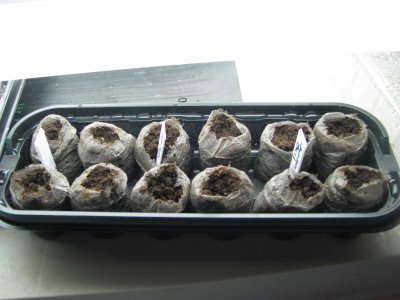
  2. Seedlings:  I choose to give my plants a chance to survive!  So I start them in peat pellets.  
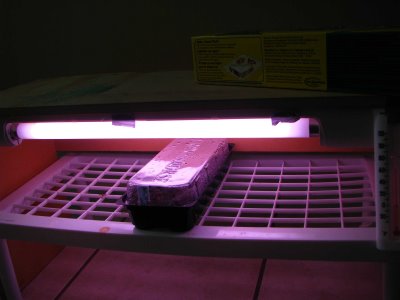
  3. Nurturing: The following is all from my sister…..and I copy her. She has made this unique set up in a shed in her backyard.  I have done this in a spare room in my basement. The seedlings and later the plants are placed in this ‘environment’.  
  4. Graduating to a larger “environment”:    She then moves them to a larger shelving system that has hanging lights.  You do not need specific ‘grow lights’, just inexpensive fluorescent lights that she hangs from chains so that you can adjust the light to hang higher as the plant grows.
  5. Keeping it warm:  She then uses an inexpensive Mylar blanket to surround the shelving unit.  
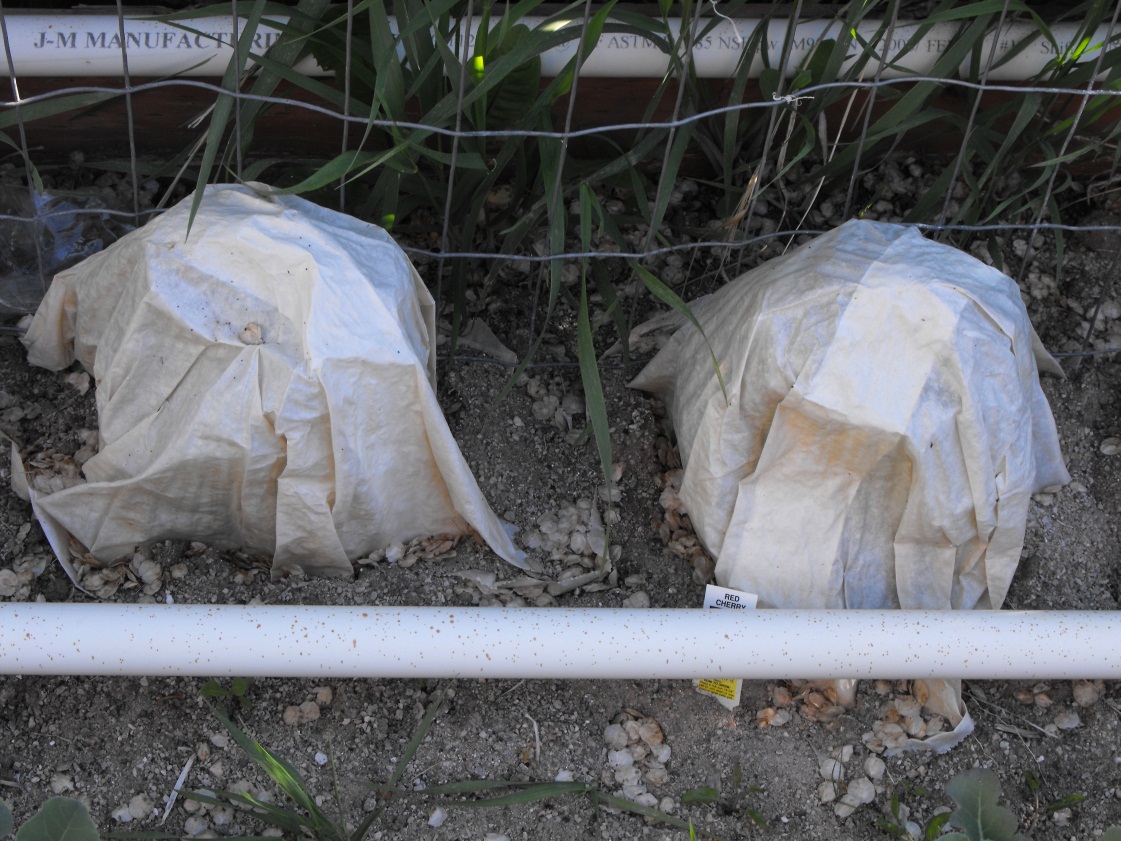
  6. Outside:  This is something I tried last year and it worked very well.  Even though Cloches can be considered inexpensive if you purchase the $.99 type, I just could help trying to make one.  The Cloche on the left was purchased from our local Nursery. The one on the right was made from 2 sheets of freezer paper.         


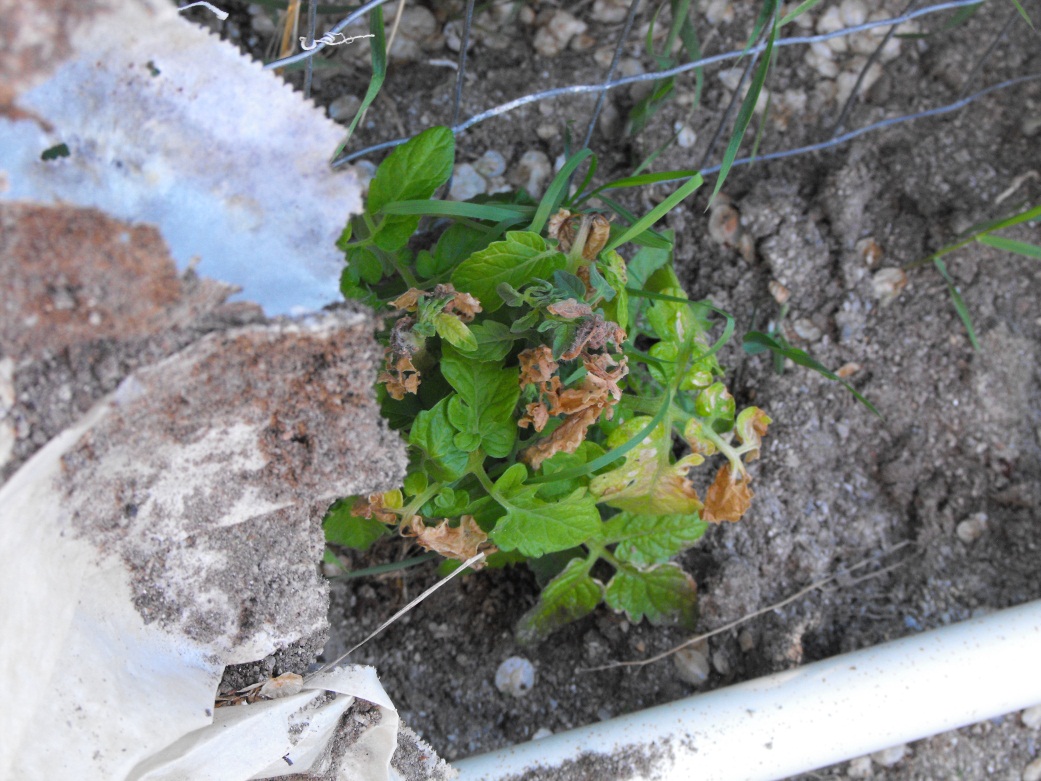
Here is how they turned out.     The one on the left is the Cloche that I made; the one on the right is the purchased Cloche.    


  1. Preparing:  I do so many things with produce. I can and dehydrate foods.  One of the most popular posts on our blog is on the use of Clear Gel.  I love this product and it lasts indefinitely.  It is a great item to include into your Food Storage.  
  2. Reaping:  There are many seeds that we plant each day. Today, our family reaped abundantly.  Our youngest son entered the Missionary Training Center.   All those early morning scripture study sessions, Family Home Evenings, Church activities, and family time were culminated for our son and our family.  It’s just like gardening…..keep working at it until you find the plan or schedule that works for you.  


A little more about Carin:
I began to write "A Matter of Preparedness" to provide information and education to our local ward/congregation on issues of preparedness as I was asked to serve as the Food Storage Specialist.  In our world today, people are very busy and cannot always attend a class etc. However, the internet is available 24/7 making the information available when folks can find a moment to read.  I have a large family, am an overly employed professional, and help run our family business.  My motto is that “Food Storage and Preparedness constitute skill sets supported by materials and equipment.” You can have all the equipment and food storage in the world, but unless you know how to use it, you may not be as prepared as you would wish.  


Thanks, Carin!

Thursday, June 2, 2011

Calling all gardeners!

Get excited, because next week is our Gardening Series here on the blog.  We have some great guest posts lined up, written by some of our fabulous fellow food storage bloggers (there are lots of them out there!).  You aren't going to want to miss it, so stay tuned.

We also plan to post an article next week full of gardening tips.... from you!  So please, if you have any gardening tips, tricks, or secrets, email us at safelygatheredin (at) gmail.com.  Please keep tips to a few sentences each, and send as many as you'd like!  Tips can range from how to start your garden, what to put in the soil, what to plant, etc.  We'd also love tips about cooking with and/or preserving your harvest.  I don't know about you but I can use all the advice I can get!

So, send 'em in and look forward to all things gardening next week!

Wednesday, April 21, 2010

How To: Grow Starts from Seeds

It's that time again. You know, the time when you feel guilty for not really wanting to start gardening while at the same time, feeling guilty for having to spend so much money on said garden.


Well, I can only help you with one of those guilts--the one where spending money is involved. This year, try growing your tomatoes, peppers, onions and other plants from seed.


The average store bought start costs about $2. While, the average packet of seeds only costs about $1.50 and grows as many tomatoes, or whatever else you want, as you can use.


All you need is the seeds you want, good dirt, and something to plant them in--be it pots or a store bought starter tray.


This was our seed set up last year.

This year we upgraded a bit. We found these trays at Walmart for $5 dollars each, the dirt for all of them (plus some extra) totalled about $10 and the seeds were another $10.

$35 for a full garden of starts is a really good deal--especially considering we are furnishing both our parents garden starts as well.


If you have a neighbor or friend whose interested in gardening, ask them if they want to grow onion starts and you will furnish the tomatoes. My mom's working on a white tomato for me which I am very curious about.


After you have chosen your seeds and filled your planters with dirt, make sure you wet the soil before planting.


As you are planting make sure you mark your seeds they are all going to look very similar when it's time to plant.


After your seeds are planted, marked, and watered, follow the directions on the seed packets, watering regularly.


Make sure after they have sprouted, to store them in a well lit area.


If you get more than one sprout in one square, gently pull it out and transplant it to an empty area.


Try some flower starts.


Or maybe some herbs.


My husband informs me, you can plant outside when the start has a second level of leaves, we still need to wait for ours to sprout more leaves. Once your starts are ready, make sure the weather is appropriate to plant--you can check your local weather or even asking your gardening, genius neighbor.


Don't worry if they look sad and dismal at first, ours did. They looked so small and fragile we actually went out and bought some starts from a greenhouse. But once our home grown plants got going, they far out produced the store bought ones.


Like I said, I am a novice gardener, so if you have any advice or suggestions to add, please do.


Happy Planting!

Wednesday, April 14, 2010

Gardening: Preparing your plot

We'll be reposting some of our gardening series throughout April to help you get ready for gardening season. Please feel free to leave tips on starting and maintaining a garden!

This is not
a raised bed garden. This is not a garden in pots. This is not square foot gardening. This is where you rip out your grass and put some dirt down. Just wanted to clarify before going on.

First thing is to clear away all the leftover debris from the year before. Pull the dead plants and the weeds as much as you can.


Then till up the dirt. You can do this with a shovel, but it's so much easier and faster to do it with a tiller. You can rent one from a local hardware store, or borrow from a friend that has one. Every year. Thanks guys.


Work your tiller all through the garden to mix up all the soil. This brings the soil from the bottom to the top, and breaks up leftover roots. All in all, making for a better planting ground.


Next up is to treat your soil. You can send in a sample of your soil, through your local cooperative extension service, to be tested for any deficiencies: lime, and whatever. Yes, that is the extent of my knowledge.


You can also buy fortified potting soil and mix it in.


Or you can walk over to your compost pile and shovel the compost onto the top of your garden. It's the easiest option.

The only thing we put in our compost pile is grass clippings. Every year we turn it over and the grass on the bottom has composed or broken down into a fertilizer. This is, thanks in large part, to a very hardworking colony of roaches. We all have to pull our own weight around here.


Now till through the garden all again to mix in all that good insect poop. 'Cause really, that's all it is.


Use your shovel to make raised rows. The seeds will go on the top of the raised rows. This way you will know exactly where the seeds are and won't be in danger of stepping on them.

If you get lots of rain in your area, or your garden is quite big, you can pick up some flat stones to use as stepping stones.

You're ready to plant!

Originally posted April 9, 2009

Wednesday, April 7, 2010

Square Foot Gardening

We'll be reposting some of our gardening series throughout April to help you get ready for gardening season. Please feel free to leave helpful tips on starting and maintaining a garden!


(image courtesy of FrugalDad.com)

Remember last week I told you all I was going to do all my gardening in containers this year? Well... that's not true. I mean, I WAS planning on doing all my gardening that way, but then the weekend happened. My in-laws came into town, and my father-in-law built me a square foot garden! I was so excited, and I'm really looking forward harvesting all my wonderful fruits and veggies this year.

Square foot gardening is a good option for many people. It's great for me because the soil in our yard is so sandy, and we didn't do a compost or anything this year so it would have taken a LOT of work to prepare our plot. With a square foot garden, all we had to do was buy some soil from the store and use that - no mixing into our current dirt, no worries about too much sand or clay, etc.

There are lots of websites out there that are dedicated to square foot gardening. Check outSquareFootGardening.com, which is an excellent resource. My father-in-law used the step-by-step directions here at Frugal Dad to build my square foot garden last weekend. It turned out great!

My square foot garden ended up being 6' x 4', and I planted some tomatoes, herbs, peppers (red, green, jalapeno), some peas, squash, and a few melons to try out. What are you planting in your gardens this year? What type of garden are you doing?

Originally posted April 23, 2009