-->
Showing posts with label Three-month supply. Show all posts

Wednesday, January 11, 2012

Food Storage Goals 2012

It's that time again. Time to go through last years goals and kick ourselves for not doing them evaluate how we did, and make some new goals for the next year.

Last year my food storage/emergency preparedness goals were:  

1. Go through and "revitalize" the following:
  • Car kit  Car Kit Revamped! Check out the post here.
  • 72 hour kits  Not even close...although I did "go through" them and used all the cash for my kid's school lunches when money was tight this fall. I guess we can count that as rotating?
  • 3 month supply menu plan  Yep, this didn't happen either.


2. Eat up current food storage
  • Make bread often (eat only homemade bread) Well, I wouldn't say we ate only homemade bread, but we eat mostly homemade bread. It just tastes better.  I even have a new favorite bread recipe that I'm sharing this week for our Food Storage Friday recipe. It's delicious.
  • Keep ground wheat flour in freezer for any cooking/baking Check! It's definitely easier to make the choice to have whole wheat pancakes, or healthy up a recipe when I have whole wheat flour already ground and ready to use.
  • Eat the pantry and freezers clean I did a great job of this! I think we only moved one box of "pantry food" (maybe it was two) but it was mostly spices and things like that. Moving is good for cleaning out cupboards. Not great for much else.
  • Make a 3 Month Supply Menu plan and grocery list (catered to our family) so that when we move into our new home I'll know exactly what to buy  This didn't happen, I have definitely not been on top of this.
  • Buy as much of our food storage as budget allows when we move into our new home Due to some financial strains this fall, the budget didn't allow ANY food storage to be purchased.  But luckily, things are looking up and we should be back on the bandwagon soon.
Considering all that happened in 2011, I'm pretty pleased with my little attempts at my food storage goals. 2011 was a tough year for me, but 2012 is already looking great.  I'm very excited to get going and get my family prepared.

Here are my  
2012 Food Storage/Emergency Preparedness Goals

1. Write out a 3-Month supply Menu plan and grocery list and BUY IT!  No more excuses, just get 'er done.

2. Redo the 72 hour kits, adding the baby items, and replacing the money.
  • Rotate the food in the 72 hour kits/batteries etc, every six months (or 2 times this year)
3.  Buy more candles/matches/flashlights/batteries and stock them where I can find them easily.
4. Make a family emergency plan and practice it with my family.

5. Can triple or quadruple the amount of salsa I made in 2011. Because I only have 3 jars left and it's only January.

What are your food storage and emergency preparedness goals for 2012?

Thursday, November 17, 2011

Preparing for Sick Days


One of my earliest memories of Hannah is when Mountain Man and I both had food poisoning (ground turkey not cooked all the way?).  We had one little baby and we were so sick. I called Hannah and she brought us over some gatorade and crackers. Ever since then I have been a firm believer in having sick foods on hand!

We've talked a little bit about being prepared for "sick days" and including "sick foods" in your three-month supply.  I decided this year that I was going to allot some money, and make a list for stocking up my "sick foods" in preparation for winter and the inevitable sicknesses that will come. 

On my list:
-saltines
-orange juice concentrate (my favorite juice when I'm sick with a sore throat)
-a few varieties of soup (so I won't have to cook--also easy on the stomach of who is sick)
-7-up (or Sprite) for an upset stomach
-Gatorade!  Do you know they make clear gatorade now? Genius! It's still flavored (this one is watermelon-strawberry), but if your kid throws it up, it won't stain!

Something I still need to get is hand sanitizer. I like to keep a large container that I get from Sam's Club around in the winter time for refills of the little bottles I keep in the house and the car.  I also really love the chlorox/lysol wipes for wiping down door knobs and faucets and other things so germs don't spread.

After I get my sanitizer, the total for my "sick food prep" will be just under $20.  So for twenty bucks I've given myself a little peace of mind.   I kind of hide these foods so we won't use them just because they're there, and I'll be sure to restock them as needed.

Don't forget to get extra fever and pain relievers too! You don't want to have to run to the store at 3am if you or your kid develops a fever.

What are some other must-haves for sick days? 
 Mountain Man's mom always fed him warm jell-o water.  

Are you planning on stocking up on sick food for the winter?

Friday, March 18, 2011

A Food Storage Oops Moment

Instead of our regularly scheduled Food Storage Friday post, I bring you this emergency (pun intended) post.

A couple of weeks ago, being a little short on funds, Mountain Man and I decided to see how long we could go by just buying perishables (produce, dairy, etc) at the store and eating up our 3 month supply at home. Verdict: I'm already out of white flour!

WHAT?

Granted, I bake a little more than the average mom, but turns out my estimate of how much white flour we eat as a family was wildly miscalculated. I'm so glad we tried this little experiment so I can readjust our flour needs, so when it really counts, we won't go without. Although my bookclub friends didn't complain about the whole wheat donuts they ate. And did you see how Brittany's focaccia turned out with whole wheat flour instead of white flour? Yep, I'm not running out of wheat any time soon.

I've determined that everyone ought to try my unplanned experiment: stop going to the store and see if your calculations on your 3-month supply of food are right.

Which food storage item do you think you've miscalculated on?

Ever thought of doing a practice run?

Wednesday, October 13, 2010

Food Storage Sweeteners

Today we'll explore different types of sweeteners that you can store in your food storage. All the beans and wheat in the world will get pretty bland without a little sugar to lighten them up.

White-Sugar-Crystals_91637-480x360
photo credit

Sugar Common table sugar is generally made from sugar cane or sugar beet.

Storage life:
White sugar will store indefinitely (aka forever) as long as it is stored in a cool, dry area. You want to cover your sugar, both for pests and because sugar is highly susceptible to moisture. When canning sugar using a canner, omit the oxygen packet, it will suck out all the moisture and make your sugar into a hard rock.


photo credit

Brown Sugar Brown sugar is basically just white sugar with added molasses, making it moist and giving it color. I don't know what I'd do without brown sugar on my oatmeal. Natural brown sugar or raw sugar is made from the first crystallization of sugar cane. Natural brown sugar is also known as turbinado sugar and other types of natural sugars.

Storage Life:
Since brown sugar is just a variation of white sugar, it's shelf life is similar. Brown sugar does harden over time though. Some ideas to keep it soft are to put a slice of bread or some apple slices into your brown sugar over night. The sugar will suck out the moisture and soften. You can also use a piece of clay (my mom has a cute bear shape piece) and soak it in water, dry the outside, and store it with your brown sugar. Make sure the sugar is in an airtight container, always covered.


photo credit

Honey Honey is a sweetener made by bees from the nectar of flowers. If you've never had honey drizzled onto fresh baked bread, you're really missing out! Because honey has a natural presence of endospores, you shouldn't give it to children under the age of 1 year old. Which is something to plan for when considering food storage.

Storage Life: Because of it's high content of sugar, honey has a very long shelf life. Keep it covered tightly and stored in a cool, dry place. Over time, honey will crystallize which will affect the texture, but not the taste or quality.

agave nectar
photo credit

Agave Nectar Agave nectar or syrup is made from the agave plant in Mexico. The same plant that gives us tequila interestingly. Agave is the sweetener of choice for vegans because it is natural and in it's raw form and is not made by bees. Here is a link for substituting agave nectar for other sugars. We've substituted agave for sugar in two recipes here on the blog: Fruit Leather and Raisin Bran Muffins.

Storage Life: 2-3 years is all the storage life is. That combined with the expensive price tag, doesn't make this my number one choice, but it is a nice alternative to have around.


Corn Syrup Corn syrup is made from corn (maize) and is not the same thing as high fructose corn syrup which is a swear word in today's society. If you've ever had a popcorn ball, you've had corn syrup.

Storage Life: Pretty much indefinite, open or unopen. Which is good because I don't think I've gone through the bottle I bought when I moved here 6 years ago. Whatever your feelings on corn syrup are, it is inexpensive and if money is tight, it might be a good thing to add to your food storage in a small quantity.

photo credit

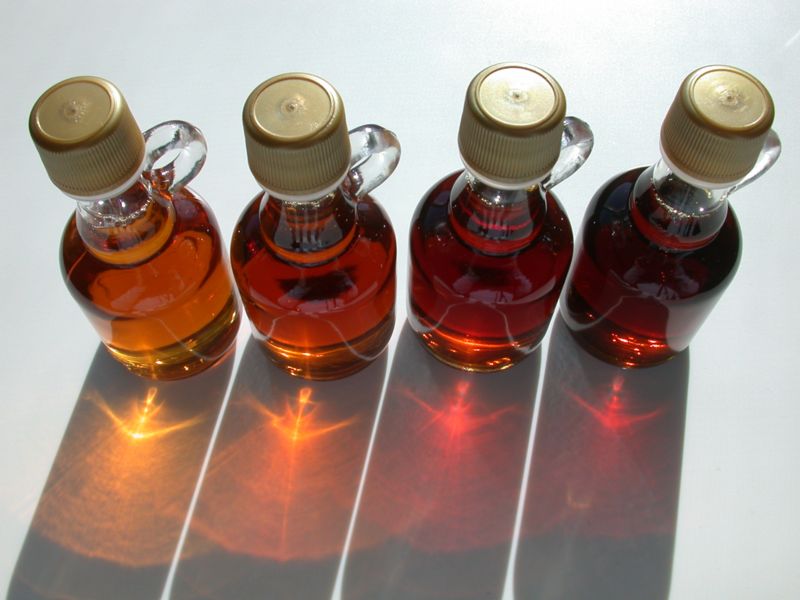
Maple Syrup No I'm not talking about Mrs. Butterworth's syrup. Real maple syrup is a syrup made from the sap of maple trees. Just a random fact: in the Civil War, the northern states were encouraged to make their sugar last by sweetening their foods with maple syrup or maple sugar because sugar cane was produced in the southern states by the slaves. If you want to learn about making maple sugar, read "Little House in the Big Woods" by Laura Ingalls Wilder (my daughter and I are reading the books). Syrup is, of course, wonderful on pancakes, but it's also great as a topping for oatmeal and can be used to replace sugar in some recipes.

Storage Life: The shelf life of unopened maple syrup is 1 year. After opening the syrup, you have six months as long as it is stored in the refrigerator.

Did I miss your favorite sweetener? Could you live without a bit of sweet in your food storage? One sweetener I always have in my food storage...Nutella!

Thursday, January 28, 2010

Egg Substitution: Flax seed

For most of us, buying powdered eggs isn't a good option for food storage because of how expensive powdered eggs can be. Well, there is a cheaper alternative. Vegans use flax seed as an egg substitute. Flax seed is a healthy alternative, high in fiber, in addition to being less expensive: a 16oz box costs between $3-4. (source and here)

Because of the nutty flavor, flax seed substitution is generally only used in baking: breads, pancakes, waffles, cookies, etc.


Take one tablespoon of milled flax seed. You can either buy it milled, or grind up the kernels in your grinder.


Add 3 tablespoons of water (amount of water may vary per recipe, but this is a pretty basic measurement).


Stir together and then let it sit for a few minutes so it can become gelatinous.


Add to your recipe instead of the eggs. Above cookie recipe is posted on the SGI Test Kitchen here.

Flax seed is like wheat flour in that after it is milled (ground) it needs to be stored in the fridge. So after you open a box of milled flax seed, stick it in your fridge. Actually seeds can be stored in the pantry until ground.

Flax seed can be found in health stores or in your local grocery store by the oat bran and other "hot" cereals.


Have any of you used flax seed before? Maybe in a different use than egg substitution?

Tuesday, July 1, 2008

The Three Month Supply

Provident Living's website encourages us to "build a small supply of food that is part of your normal, daily diet."


At Safely Gathered In, we believe in having a three-month supply of non-perishable food.  This ensures that you will not lose your food storage if your power goes out for an extended period of time, which is probable in any natural disaster (goodbye, freezer food!).  Also, if you have planned your three-month supply to only include non-perishables, you can truly live off of your food storage alone without ever visiting the store for anything.  Of course, this can make getting a three-month supply a bit more challenging, but it's definitely doable.  Yes, I do have a good amount of food in my freezer, but this is a supplement to my non-perishable three-month supply.  I do not plan to rely on my freezer food in a disaster.


How do I do it? First, check out our article on how to plan your three-month supply.  You don't have to plan out 12 weeks of different dinners, breakfasts, and lunches!  You only need some favorite meals, and you just stock up on three-months' worth of those meals.  Click on the article link above for more information.


What do I store?  Think of the meals that you and your family like to eat.  Most of these meals can probably be turned into "food storage friendly" meals - i.e., they use only non-perishables.  Canned chicken can be used for fresh; canned veggies/fruits for fresh.  Cream can be replaced (in some cases) with evaporated milk. For meal ideas, check out our food storage recipes page.


How can I afford it?  Many people (including us!) are on a very tight budget.  Getting your three-month supply isn't something that most people can do in one day, or even a week.  Buy a few extra canned items every time you visit the store.  Watch for sales, and stock up when the items you need hit rock bottom prices. Do not go into debt to collect your food storage.


Why three months?  Three months is a good amount to food to (hopefully) keep your family afloat during a time of crisis.  If the main breadwinner in your home loses their job, you could live off of your food storage for three months and use your grocery budget for bills.  For a natural disaster, quarantine, etc., three months of food can be lifesaving.


Won't all that food go bad?  Rotate, rotate, rotate!  I know, it's easier said than done.  Organizing and rotating food storage is actually the hardest part for many people.  You should be eating a food storage meal once every week or two.  That way, it gets rotated and the food won't go bad.  How do you ensure you are rotating correctly, though?  And how do you make sure you replace what you've eaten?  Well, we've come up with 5 food storage rotation methods - check them out and find which one(s) works for you!  Methods: sticky note, color-coded stickers, rotating shelves, two-column method, and rubber bands.


Does my longer-term supply count towards the three-month supply too?  For me it does!  Abbie wrote a great post on how she stores her longer-term storage in a way that gives her easy access to it, so she can eat through it and rotate it regularly.  Check it out!

Wednesday, June 25, 2008

How To: Plan Your Three-Month Supply

I could talk all day about the importance of having a food storage: temporary job loss, natural disaster, flu pandemic, but the point is, it's SMART to have food set aside, but it's also daunting. Hopefully you won't feel quite so overwhelmed after we explore this method of organizing and collecting food storage.


Keep in mind that this is just one way out of many possibilities, and this is an example, not a plan to copy. Although I don't mind if you borrow some of the meal ideas.


First thing to do is see how much food you are going to need. In the case of the 3-month supply, what does 3 months entail?


Breaking down three months (in red) equals 13 weeks of food or 91 dinners, 91 lunches, and 91 breakfasts. (This is an approximation based on 1 month being 31 days and the other 2 months being 30 days, but break it down however you like). (Yes, I added wrong on my paper--but this is just a sample so don't worry about it!)


Now in yellow I have assigned each week to a menu ('A' or 'B'). So, when I say "menu", I'm talking about 7 days of food. I will repeat these menus over and over because I am not willing to stock and plan 91 different dinner meals! My family can live on repeats for three months, especially if the alternative is no food at all. If you feel like you could eat the same thing each week, then plan one week's worth of meals. I don't think I could eat the same thing every week, so I'm planning two weeks of menus that I will rotate. If that still sounds too repetitive for you then plan three weeks of menus, or even four. It's up to you and your family, and what you can store.


So for my menu there will be 7 weeks (49 dinners) on the 'A' menu week and 6 weeks (42 dinners) on the 'B' menu week (dinners only).


Next we need to plan our menus. Use the food guideline recommendations to make sure that the meals are balanced and healthy. Please plan for your own family's needs and likes. This is simply an example. Keep in mind that you may have electricity during this time or you may not. I'm choosing to plan for the worst case scenario and only choose meals around nonperishable items. Chances are you could have electricity...but it's not a risk I'm willing to take, plus these foods will store for longer!


Notice how many times I will be eating these meals (in red). It's important to figure this out so you can estimate how much food you will need to store. Especially for those bulk items that don't come in individual serving sizes.


Then write down what goes into each meal, all the ingredients. Don't forget spices and oil and things like that, there's no need for your food storage meals to be bland.


Now add up what you would need for all the meals. Since I'm having spaghetti 7 times, I will need: 7 jars of spaghetti sauce, 7-1 lb boxes of spaghetti noodles and 14 cans of vegetables (2 cans/night for our family of 4). This is the most difficult part of the process: deciding how much we eat of everything. Keep in mind that it is better to overestimate than to underestimate.


Finally, add everything up (in yellow) and make a master shopping list. List how many jars of spaghetti sauce you need, how many cans of fruit. Once you have this completed, check it with your food storage inventory you already have to see if you can reduce the amount of food on your master list.


Now you have a list of things you need. Obviously you will not go to the store and buy 94 cans of fruit at once, but you can buy little by little. Take advantage of the sales, and keep track of what you buy AND what you eat. It might be helpful to have an excel spreadsheet or a chart to help you keep track of what you are buying/storing and what you are using (we are going to start talking more about how to rotate food in a few weeks).


Please note: this is not a complete list! This will not feed your family for three months! This is just a sample!


I hope this walk-through has helped you become a little more confident about gathering a 3-month supply. It REALLY is doable if you plan and work on it little by little.